

Where Do I Start? Check What You Already Have
Where Do I Start? Check What You Already Have
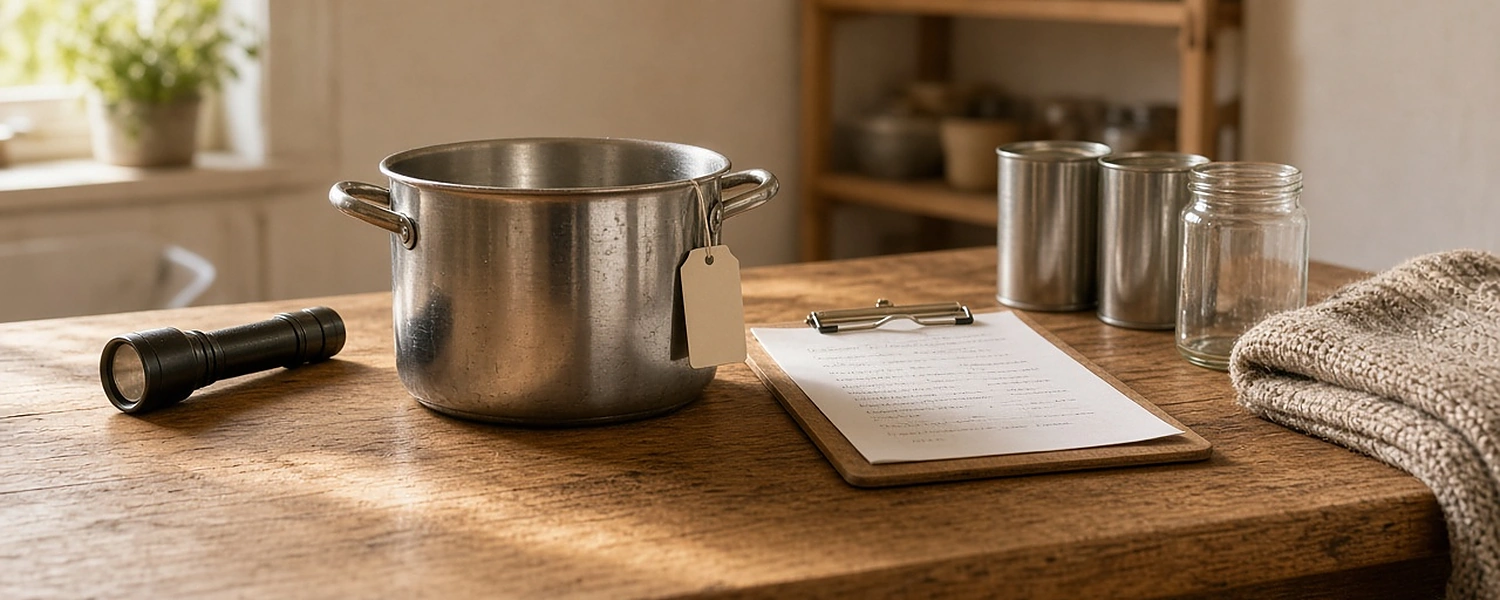
When people ask where to start with preparedness, they often mean, "What should I buy first?" A better first step is walking through the house and noticing what is already there.
Most homes already have a pot to boil water, a flashlight, a winter coat, a basic first aid kit, and several days of the food we already eat. Those count. Checking them off on a list shows real progress and makes the gaps obvious, without a big shopping trip.
Start with a list, not a shopping cart
Open the free checklist at Preparedness Checklist and create a free account so your progress is saved. Then walk room by room and mark what you already have. We do not need every item today. We only need an honest picture of the starting point.
Walk through your house
A short walk often turns up more than we expect. Use the rooms below as a guide, and check off the matching items on the list as you go.
Kitchen
Look in the pantry, the drawers, and under the sink.
- Foods you already eat, such as canned goods, pasta, rice, peanut butter, and snacks, count toward a 2-Week Supply Of Foods You Already Eat
- Jars, bins, and freezer bags are Extra Food Storage Containers
- Clean bottles and jugs can be Extra Clean Storage Containers for water
- A stainless pot or kettle is a start on Camp cookware, because you can boil water and heat simple meals
- A manual can opener belongs on the list, and a tiny P-38 can opener is a useful backup
- Lighters or matches, plus a grill or camp stove, cover Lighters, matches and ferro rod and Camp Stove, Grill, Or Wood Cooking Setup
Bathroom and medicine cabinet
- A first aid kit, even a small one, is the First Aid Kit item
- Everyday pain relievers, allergy medicine, and other basics are a Supply Of Over The Counter Medications
- Extra prescription medication, if your doctor agrees, counts toward a Supply Of Prescription Medications and Rx meds
- Soap, toothpaste, toilet paper, and wipes are Off Grid Hygiene Supplies
- An old pair of glasses is better than none, and fits Spare Glasses, Contacts And Hearing-Aid Batteries
Garage, basement, or junk drawer
- A claw hammer, screwdrivers, pliers, and a tape measure are most of a Basic Toolkit
- Work gloves and duct tape show up in Work gloves and Duct tape
- A fire extinguisher and working smoke and carbon monoxide detectors are Fire Extinguisher and Working Smoke And CO Detectors
- Extra water jugs and heavy-duty extension cords are Extra Clean Storage Containers and Heavy-Duty Extension Cords
- Find the main water, gas, and electric shutoffs now, which is Learn How To Shut Stuff Off
Closets and linen shelves
- Warm jackets, sweaters, hats, gloves, and good socks count toward Clothes For The Bag and Hot & Cold Weather Safety
- Extra blankets and sleeping bags support Get Camping Gear and Sleeping bag
- Flashlights or headlamps, plus spare batteries, are Flashlight and Headlamp and Lighting Without Power
- A backpack you can actually carry is the Backpack item
- Copies of IDs and important papers, and a little cash in small bills, are Document copies and Cash
Camping gear
If you already camp, much of that kit is preparedness gear. A tent, sleeping bags and pads, a lantern or headlamp, a portable stove and cookware, a water filter, and a cooler cover Get Camping Gear, along with Portable Water Filter, Backpacking Stove, and Camp cookware. Store it together, and make sure the tent is dry before you pack it away.
Clothing is the cheapest preparedness option
Before we buy a heater, a generator, or other big-ticket gear, it helps to look at the clothes we already own.
In cold weather, a warm jacket, a hat, gloves, and a few pairs of good socks do more for comfort than most people expect, and they cost far less than space heaters or generators. Layers let us add or remove clothing as the temperature changes. Wool socks and wool sweaters stay useful even if they get a little damp, and they show up often at thrift stores and yard sales.
In hot weather, light breathable clothing, a wide-brim hat, and a couple of cooling towels help during a power outage when the fan or AC is off. Many of us already have most of this in a closet or a summer bin. Those pieces belong on Hot & Cold Weather Safety and Clothes For The Bag.
Proper clothing will not replace a long-term heat or cooling plan, but it is the cheapest place to start, and it is often already paid for.
What to look for at thrift stores and yard sales
Once the gaps are clear, we do not have to fill them at full price. Goodwill, other thrift stores, yard sales, and Facebook Marketplace are full of ordinary household items that belong on a preparedness list.
Good finds include:
- Stainless steel pots and pans
- Cast iron skillets and Dutch ovens
- Wool blankets, wool sweaters, and winter coats
- Camping stoves, cookware, and coolers
- Water containers, if they are sound and food-grade
- Oil lamps and lanterns (check the chimney and wick, and store fuel safely)
- Hand tools and a manual can opener
A few things are better to skip, or to inspect closely:
- Used car seats and helmets, because safety gear like this has expiration dates and can be damaged in ways that are hard to see
- Expired first aid supplies and medicines
- Cracked or cloudy plastic for drinking water, and anything that once held chemicals. Use only food-grade containers
- Camp stoves or lamps that are broken, badly rusted, or missing parts
A stainless pot from a yard sale will boil water just as well as a new one. That is the point. Much of this is common, sturdy household stuff.
Check it off, then fill the real gaps
As we walk through the house, we can check items off the free checklist. The leftover blanks are the actual starting plan, usually a short, calm list, not a huge project.
Create a free account at preparednesschecklist.com so your progress is saved. Work through the categories at your own pace. More beginner guides are on the way.